

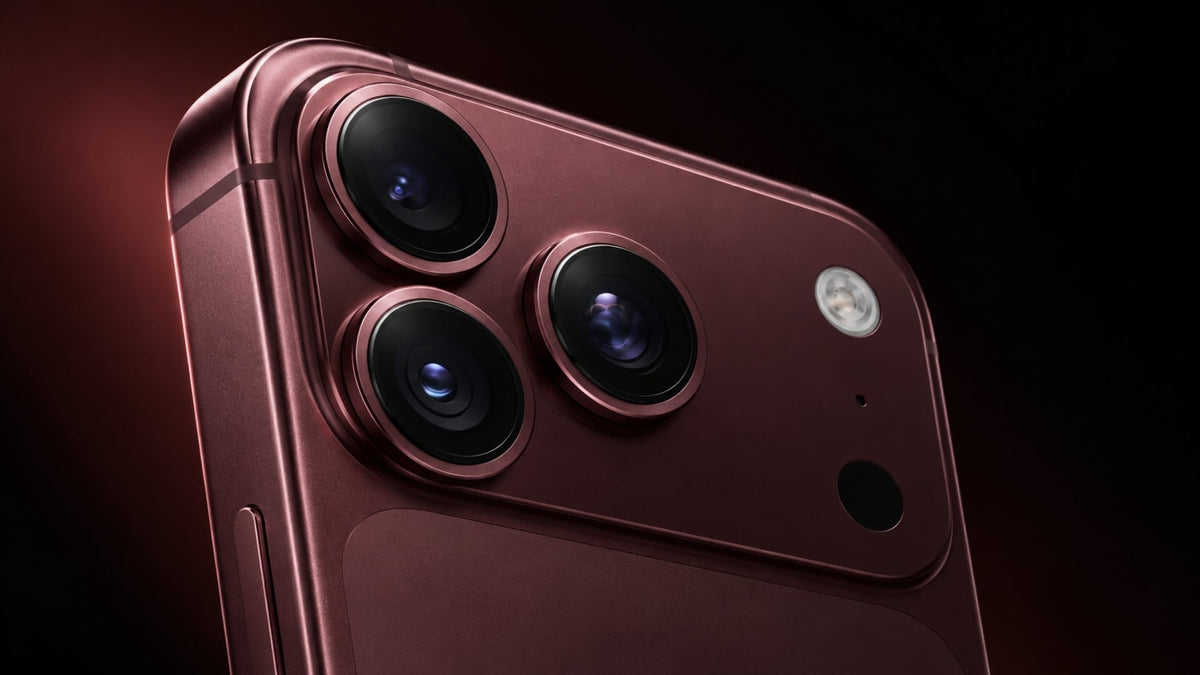
These are Apple's most capable iPhone cameras so far, but almost all of the progress sits in the main camera. The iPhone 18 Pro and Pro Max are the first iPhones with a mechanical variable aperture. It uses six thin blades and runs from ƒ/1.48 to ƒ/4.0. Apple also adds Pro controls and a live histogram to the built-in Camera app.
In this review, we break down the iPhone 18 Pro Max camera specs lens by lens and explain what each change means when you take photos and record video. Some parts didn't change. The Ultra Wide, the 4x telephoto, and the 18MP selfie camera carry over from the iPhone 17 Pro.
Apple announced both phones on September 9, 2026, at USD 1,199 for the Pro and USD 1,299 for the Pro Max. That's USD 100 more than the iPhone 17 Pro models at each tier, so it's fair to ask what the extra money buys. Below, we cover each camera, video, cases, and who should upgrade.
iPhone 18 Pro and iPhone 18 Pro Max Have 48MP Main Cameras
Both phones use the same 48-megapixel (MP) Fusion Main camera, and it's the only rear camera with real hardware changes in 2026. According to Apple's iPhone 18 Pro tech specs, the full camera system looks like this:
| Camera | Resolution | Focal length | Aperture | Stabilization |
|---|---|---|---|---|
| Fusion Main | 48MP | 24 mm | Variable ƒ/1.48 to ƒ/4.0 | 2nd-gen sensor-shift OIS |
| Fusion Ultra Wide | 48MP | 13 mm (120° view) | ƒ/2.2 | Not listed |
| Fusion Telephoto (4x) | 48MP | 100 mm | ƒ/2.8 | 3D sensor-shift OIS |
| Front (Center Stage) | 18MP | Not listed | ƒ/1.9 | Ultra-stabilized video |
OIS means optical image stabilization. It moves the sensor to cancel out hand shake. Of the three rear cameras, only the main camera gains new hardware. The other two keep the iPhone 17 Pro's specs.
- 24MP vs 48MP photos: The main camera saves 24MP photos by default and 48MP photos when you need them. A 24MP file keeps storage use lower. A 48MP file gives you more room to crop or print large.
- Colors and skin tones: Photographic Styles 3 and Smart HDR 5 handle color and bright skies. HDR stands for high dynamic range, which means keeping detail in both shadows and highlights.
- Natural background blur: At ƒ/1.48, the lens creates real optical blur behind close subjects, without relying only on software.
- Close-up photography: Wide apertures give a very thin zone of focus. Stop down to ƒ/2.8 or ƒ/4.0 when you need a whole object sharp. For true macro shots, the phone switches to the Ultra Wide.
- Moving subjects: Smart focus tracking follows a subject once you select it, which helps with pets, kids, and sports.
- Indoor and Night mode photos: The wider aperture lets in more light. We cover this in the low-light section below.
Variable Aperture and Camera Controls
In the Camera app, you can pick four apertures: ƒ/1.48, ƒ/1.8, ƒ/2.8, and ƒ/4.0. A smaller number lets in more light and blurs the background more. A larger number keeps more of the scene in focus.
Apple's new Pro controls let you set aperture, shutter speed, and white balance yourself, with a histogram to check exposure. The list doesn't include manual ISO (sensor sensitivity), so you can't lock brightness fully by hand. That's the main gap for people coming from dedicated cameras.
The Camera Control button handles quick changes to exposure, depth, zoom, camera, Styles, and tone without opening menus.
iPhone 18 Pro and iPhone 18 Pro Max Have Ultra-Wide and Macro Cameras
The Ultra Wide is unchanged from the iPhone 17 Pro. It still uses a 48MP sensor, a 13 mm lens at ƒ/2.2, and a 120° field of view.
- Landscapes and architecture: The wide view fits big scenes and tight rooms. Apple applies lens correction to straighten the bent edges that ultra-wide lenses create.
- Group photos: It fits more people into the frame when you can't step back.
- Macro photography: The phone supports 48MP macro photos, plus macro video in slo-mo and time-lapse.
- Low-light photos: Its ƒ/2.2 aperture is much narrower than the main camera's ƒ/1.48. In dim scenes, switch to the main camera whenever the framing allows.
Telephoto Camera and Zoom Features of iPhone 18 Pro and Pro Max
The telephoto camera uses a 48MP sensor behind a 100 mm (4x) lens at ƒ/2.8, with a tetraprism design and 3D sensor-shift OIS. Apple lists the hardware as unchanged from the 17 Pro.
Zoom on these phones works at three levels:
- Optical zoom: The phones have true lenses at only three lengths. These are 13 mm, 24 mm, and 100 mm.
- Optical-quality zoom: The 2x (48 mm) and 8x (200 mm) settings are 12MP crops from the 48MP main and telephoto sensors. They keep good detail but aren't separate lenses.
- Digital zoom: You can zoom up to 40x for photos and 24x for video. Expect detail to drop as you go past 8x.
For most people, 4x is a useful everyday length for portraits, pets, and details across a room. Use 8x for distant subjects in good light. Treat 40x as a way to read a far-off sign rather than a way to take a keeper photo.
Portrait Mode and Natural Background Blur of iPhone 18 Phones
You now get two ways to blur a background. The ƒ/1.48 aperture creates optical blur, and Portrait mode builds blur from a depth map that you can adjust after the shot.
- Natural blur: This suits close subjects and simple backgrounds, where the optical falloff looks smooth.
- Portrait mode: This works better when you want strong separation or want to change focus and depth later, using Focus and Depth Control.
- Portrait focal lengths: You can shoot portraits at 1x (24 mm), 2x (48 mm), or 4x (100 mm). The 4x setting flattens facial features in a flattering way.
- Portrait Lighting: Six lighting effects let you change the mood after capture.
In Portrait mode, a middle aperture such as ƒ/1.8 or ƒ/2.8 is a sensible starting point. The depth map already adds blur, so the widest setting adds less than you'd expect.
iPhone 18 Phones Have 18MP Selfie Cameras
The front camera is the same 18MP Center Stage camera as the iPhone 17 Pro, with an ƒ/1.9 lens and autofocus. Center Stage widens the frame automatically when more people join a selfie or a video call. It also lets you take horizontal or vertical shots without turning the phone.
- Selfie portraits: Portrait mode with Focus and Depth Control works on the front camera too.
- Front-camera video: You get 4K Dolby Vision up to 60 frames per second (fps), Cinematic mode up to 4K30, ProRes RAW, and Apple Log 2.
- Vlogging: Ultra-stabilized video and Dual Capture help when you record yourself and the scene at once.
- Low-light selfies: Night mode is available on the front camera.
Low-Light and Night Photography Features
The main camera is the best low-light tool on these phones because of its ƒ/1.48 aperture. By our calculation, ƒ/1.48 lets in about half a stop more light than the iPhone 17 Pro's fixed ƒ/1.78 lens. In practice, that gives Night mode more light to work with, so you may need slightly shorter exposures.
There's a trade-off. A very wide aperture gives a thin zone of focus, so subjects at different distances won't all be sharp. Apple also lists Night mode time-lapse and improved low-light video at 1080p.
Video Recording and Stabilization Features of iPhone 18 Pro and Pro Max
Video is where the iPhone 18 Pro adds the most for creators.
- 4K video quality: The main camera records 4K Dolby Vision at up to 120 fps, which you can use for smooth slow motion.
- Video stabilization: Cinematic video stabilization works at 4K, 1080p, and 720p. Action mode handles shaky footage at up to 2.8K60.
- Cinematic mode: It now records at up to 4K60, up from 4K30 on the 17 Pro. You can apply Cinematic effects after recording on the main camera.
- ProRes RAW and Apple Log 2: ProRes RAW works through compatible apps. ProRes reaches 4K120 when you record to an external drive. Apple Log 2 gives editors more room for color grading.
- Audio: Four studio-quality mics support Spatial Audio, wind noise reduction, Audio Mix, and Audio zoom.
Can a Phone Case Affect iPhone 18 Pro Camera Performance?
Yes, but only in specific cases. A badly fitted case can block part of the frame, cause flash glare, or affect stabilization.
Many people worry that a case will scratch or crack the camera, or get in the way of shots. Here's how to avoid problems:
- Exact fit: Choose a case listed for the iPhone 18 Pro or Pro Max, not an older model, so the camera cutout lines up.
- Magnets near the lenses: Apple's guidance on magnets and the iPhone camera explains that strong magnets or metal plates near the cameras can stop OIS and autofocus from working properly.
- Raised edges: A thick lip around the camera can cast shadows into Ultra Wide shots.
- Flash glare: Clear or shiny rims near the flash can reflect light into the lens. Cheap glass lens covers can also add flare.
At Ghostek, we make iPhone 18 Pro cases and iPhone 18 Pro Max cases for each exact model. Options range from the slim, clear COVERT case for iPhone 18 Pro Max to sturdier designs.
Is There a Difference Between iPhone 18 Pro vs Pro Max Camera?
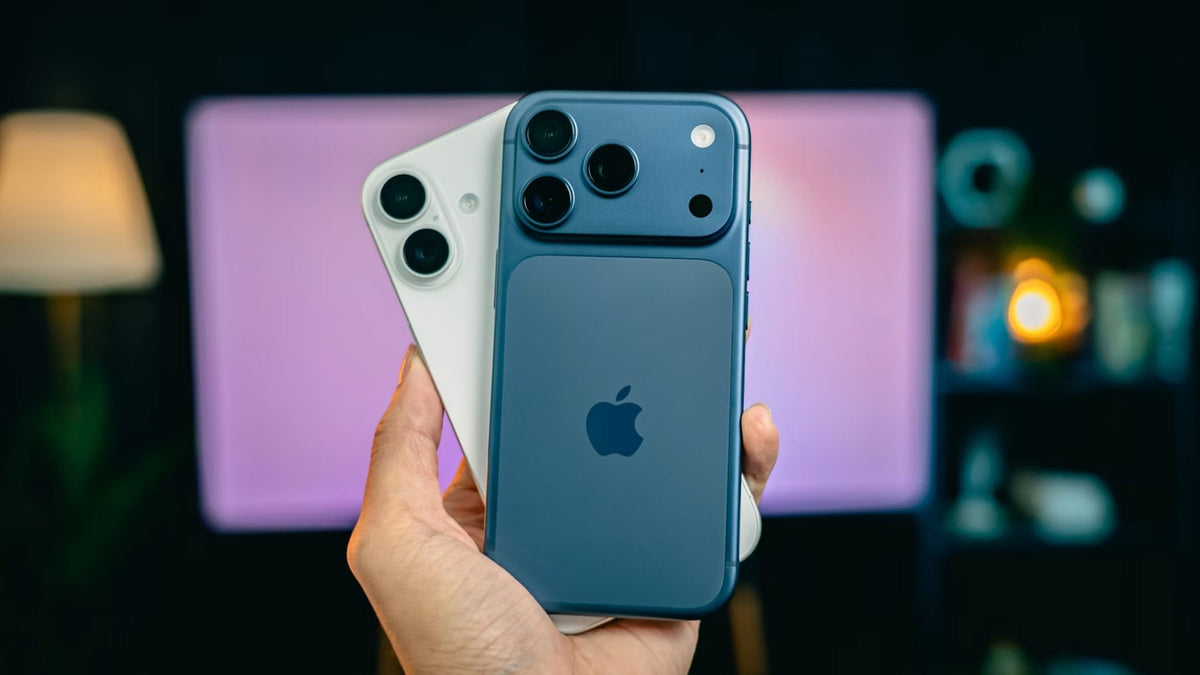
No. The iPhone 18 Pro Max camera specs match the iPhone 18 Pro's exactly, from the variable aperture to the 4x telephoto. Your choice comes down to the phone around the cameras:
- Screen size: The 6.9-inch Pro Max gives you a larger viewfinder and more space for editing than the 6.3-inch Pro.
- Weight: The Pro weighs 211 g and the Pro Max weighs 249 g. That 38 g difference is easy to notice during long handheld shoots.
- Battery: Apple rates the Pro at up to 36 hours of video playback and the Pro Max at up to 45 hours.
What's Improved from iPhone 17 Pro to iPhone 18 Pro Camera?
The upgrade centers on the main camera and video features. This table shows what changed:
| Feature | iPhone 17 Pro | iPhone 18 Pro |
|---|---|---|
| Main aperture | Fixed ƒ/1.78 | Variable ƒ/1.48 to ƒ/4.0 |
| Cinematic mode | Up to 4K30 | Up to 4K60 |
| Video digital zoom | Up to 15x | Up to 24x |
| Apple Reference Image | No | Yes |
| Ultra Wide, telephoto, selfie | 48MP, 48MP 4x, 18MP | Same |
| Launch price | USD 1,099 | USD 1,199 |
If you own a 17 Pro, the decision rests almost entirely on whether you want aperture control and 4K60 Cinematic video. Owners of older phones gain more, because they also pick up the 48MP Ultra Wide, the 4x telephoto, and Center Stage.
What We Like About the Cameras of iPhone 18 Pro and Pro Max
- Variable aperture: It gives real optical blur and more control over depth.
- Pro controls: Aperture, shutter, white balance, and a histogram now sit in the native app.
- Cinematic 4K60: Smoother footage, with effects you can change after recording.
- Pro video formats: ProRes RAW, Apple Log 2, and Genlock support.
- Same cameras on both sizes: You don't pay extra for a better camera.
What We Don't Like About the Cameras
- Unchanged Ultra Wide: It has the narrowest aperture and gains nothing new.
- No manual ISO: Full manual exposure still isn't possible.
- Carryover hardware: The telephoto and selfie cameras match the 17 Pro.
- 8x is a crop: It isn't a dedicated lens, despite the "optical-quality" label.
- Higher price: Each model costs USD 100 more than in 2025.
Should You Buy iPhone 18 Pro or Pro Max?
- Choose the iPhone 18 Pro if: You want the full camera system in a lighter 211 g body that's easier to use with one hand.
- Choose the iPhone 18 Pro Max if: You shoot long video sessions, edit on the phone, or want the largest viewfinder. The 45-hour video playback rating gives you the most room for long days.
Are These Apple's Best iPhone Cameras Yet?
Yes, but by a modest margin. The variable aperture, Pro controls, and 4K60 Cinematic mode make the iPhone 18 Pro cameras Apple's most flexible yet, while the Ultra Wide, telephoto, and selfie cameras stay the same. Upgrade from an iPhone 16 Pro or older for the full set of gains. If you own a 17 Pro, upgrade only if you'll use aperture control regularly.
iPhone 18 Pro and Pro Max Camera FAQs
Does the iPhone 18 Pro Max have 8x optical zoom?
No. Its 8x setting is "optical-quality" zoom, a 12MP crop from the 48MP 4x telephoto sensor. The only true optical lengths are 13 mm, 24 mm, and 100 mm.
Does the variable aperture work on every rear camera?
No, only the main camera has it. The Ultra Wide stays at ƒ/2.2 and the telephoto stays at ƒ/2.8.
What is Apple Reference Image?
It's a new main camera feature that captures signed sensor data and creates a reference image that can't be changed. Apple says it helps show that a photo is authentic. It works at 1x and 2x.
Is the iPhone 18 Pro good for professional video work?
Yes, for many jobs. Genlock helps sync it with other cameras, ACES support fits pro color workflows, and ProRes reaches 4K120 with external recording.
Can you shoot RAW photos on the iPhone 18 Pro?
Yes. The phones support ProRAW and DNG capture, along with HEIF and JPEG, so you can edit photos with more flexibility.

Leave a comment
This site is protected by hCaptcha and the hCaptcha Privacy Policy and Terms of Service apply.